
This service is currently not available. Please try again later.
08/31/2026
Prevention | Maintenance & Technology
Docking in Challenging Conditions
Preparation, patience and knowing when to walk away
Few manoeuvres test a skipper's confidence quite like docking. In calm conditions it requires precision and teamwork, but introduce a strong crosswind or fast-running current and even experienced boaters can find themselves under pressure.
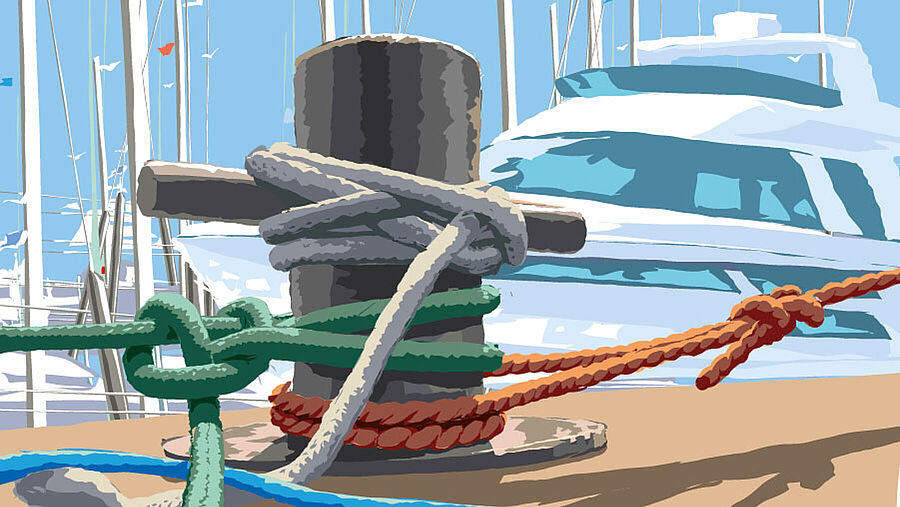
Unlike a car, a yacht has no brakes. Wind and current continue to push the vessel long after you've committed to your approach, leaving little room for hesitation or last-minute corrections.
The good news? Successful docking isn't about luck—it comes down to preparation, understanding how your boat responds to the conditions, and recognising when it's safer to try again rather than force a difficult approach.
The following practical tips, based on advice from experienced captains Chris and Alyse Caldwell, will help you approach challenging dockings with greater confidence and reduce the risk of unnecessary damage.
Before You Arrive: Preparation Makes All the Difference
- Practice before you need it
- The best time to learn how your yacht behaves in wind and current is not during a busy marina arrival.
- Spend time practising in open water using buoys or markers to simulate a berth. Experiment with different wind angles and current directions so you understand how your vessel responds before you're under pressure.
- The more familiar you are with your boat's handling characteristics, the calmer and more confident you'll be when conditions deteriorate.
- Golden Rule: Confidence comes from experience—not from hoping everything goes to plan.
Research your destination
Before arriving, take a few minutes to understand what awaits you.
Check charts and cruising guides for nearby rivers, tidal flows or narrow entrances that may create strong currents.
If possible, call the marina ahead and ask:
- Will you be docking port or starboard side?
- Bow-in or stern-in?
- Which side should your fenders be rigged?
- Are there pilings between neighbouring berths?
- What are the current wind and tidal conditions?
- Are there any local challenges you should be aware of?
A two-minute phone call can eliminate surprises.
Don't be afraid of Plan B
One of the best decisions a skipper can make is deciding not to dock.
If the conditions exceed your experience level, consider anchoring in a sheltered location until conditions ease, or divert to another marina.
Remember—this is recreational boating. There is rarely a deadline worth risking your boat, your crew or someone else's vessel.
Walk the berth first
Whenever practical, stop at the fuel dock before heading to your assigned berth.
Fuel up, empty holding tanks if required, then walk down to inspect your berth.
Look for:
- protruding anchors
- pilings
- finger pontoons
- narrow fairways
- wind funnels between marina rows
- current direction
A quick inspection often reveals challenges that aren't obvious from the helm.
If the berth appears particularly difficult, don't hesitate to ask the marina if a more accessible temporary berth or tee-head is available until conditions improve.
Prepare Your Boat Before the Approach
Understand how your boat behaves
Every yacht reacts differently.
Generally:
- Powerboats present more surface area above the water and are usually affected more by wind.
- Sailing yachts have deeper keels and are often influenced more by current.
Knowing which force has the greater effect on your vessel helps determine the safest approach.
Brief your crew
Many docking incidents begin with confusion rather than poor boat handling.
Before entering the marina:
- assign each crew member a role
- explain which lines they'll handle
- identify who will communicate with the dock
- remind everyone to stay calm
Clear communication is one of the most effective safety tools onboard.
Rig your lines and fenders early
Never wait until you're approaching the berth.
Prepare:
- bow lines
- stern lines
- both midship lines
- fenders on the correct side
- one or two spare "walking" fenders that can quickly be repositioned if required
If only one line can be secured initially, a midship line often provides the greatest control over the vessel.
Quick Checklist Before Entering the Marina
✓ Crew briefed
✓ Lines prepared
✓ Fenders deployed
✓ Berth confirmed
✓ Wind and current assessed
During the Docking Manoeuvre
Let the stronger force work for you
Whether it's the wind or the current, always identify which force has the greatest influence over your yacht.
Whenever possible, make your approach into that dominant force.
Trying to fight both at once often leads to rushed decisions and excessive throttle.
Watch your stern
Powerboat skippers often focus on the bow when entering a berth.
However, the higher profile of the stern usually catches the wind first, causing it to drift more than expected.
Regularly glance behind and alongside—not just ahead.
Don't rely solely on thrusters
Bow and stern thrusters are excellent aids, but they shouldn't replace good boat handling.
Most electric thrusters are designed for short bursts of operation. Prolonged use can quickly drain batteries or trigger overheating protection, leaving you without assistance when you need it most.
Use them to fine-tune your manoeuvre—not to overcome conditions beyond your vessel's capabilities.
Use steady, controlled movements
Most docking damage happens because skippers use too much speed trying to recover from an approach that's already gone wrong.
Maintain just enough momentum to retain steering while allowing the wind or current to work predictably.
Smooth corrections are almost always more effective than sudden bursts of power.
Know When to Abort
One of the most valuable skills any skipper develops is recognising when to start again.
If the approach isn't unfolding as planned:
- move clear
- regain control
- reassess the conditions
- communicate with the marina
- make another attempt only when you're ready
There is no embarrassment in aborting a difficult docking.
There can, however, be significant cost in forcing one.
Remember: A second approach costs a few minutes. A damaged hull can cost weeks out of the water.
The final take-home
Every skipper, regardless of experience, has encountered a docking that didn't go to plan.
Preparation, practice and patience remain your greatest allies. By understanding your vessel, planning ahead and knowing when to pause or try again, you'll dramatically improve both your confidence and the safety of everyone onboard.
After all, the goal isn't simply getting into the berth, it's arriving safely so that you can enjoy the rest of your cruising season without headaches and costly hull repairs!


