This service is currently not available. Please try again later.
04/28/2026
Cruising | Aboard
The Unexpected Challenges of Life Aboard
We all expect some challenges as liveaboards — but these are the ones rarely mentioned.
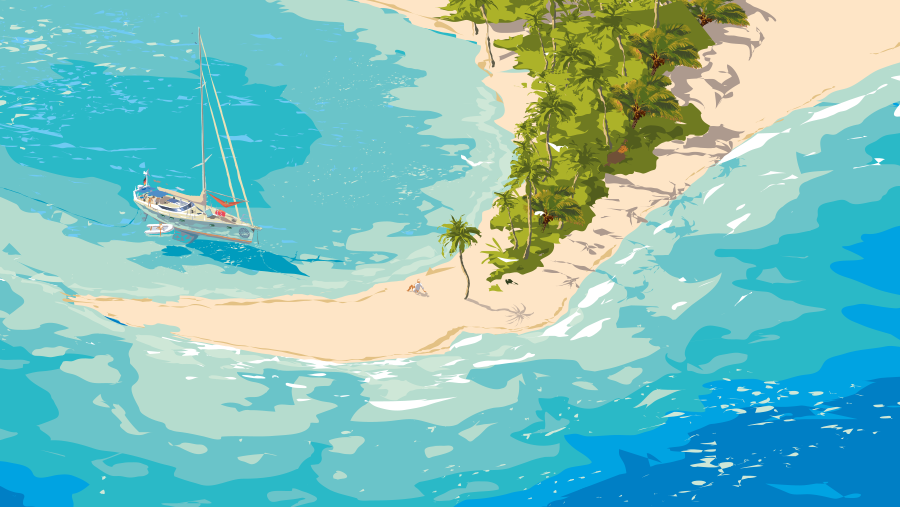
There is something undeniably appealing about the idea of casting off, leaving land life behind, and cruising to remote anchorages, tropical islands, and places most people only ever see on a screen. For many boat owners, living aboard represents freedom, adventure, simplicity, and the chance to experience the world from a completely different perspective.
And in many ways, it is exactly that.
There are sundowners on quiet beaches, snorkelling before breakfast, new friendships made in anchorages, and the satisfaction of travelling with your home wherever you go. For bluewater cruisers, liveaboard life can be incredibly rewarding — but it also comes with a very particular set of challenges that are not always obvious from the outside.
Some are well known: night passages, boat maintenance, weather windows, border formalities, and the occasional uncomfortable anchorage. Others are less often discussed. These are the practical, everyday realities that many cruisers only fully appreciate once they have untied from land life.
Staying connected can be both a blessing and a burden
Modern cruising is far more connected than it used to be. Starlink, mobile data, online forums, apps, cruising guides, and digital communities have changed how boat owners communicate and share information.
One particularly useful resource for cruisers is No Foreign Land, which has become an incredibly helpful platform for finding anchorages, tracking other boats, sharing local information, and connecting with the wider cruising community. Whether you are looking for recent notes on an anchorage, checking where other boats are headed, or trying to understand local facilities, tools like No Foreign Land can make cruising feel far more supported — especially in unfamiliar waters.
That said, constant connectivity also changes the experience. It can be tempting to check updates, messages, forecasts, and notifications endlessly. The challenge is to use these tools wisely without letting them take over the very freedom cruising is supposed to offer.
English is not always as widely spoken as expected
For Australian and New Zealand boat owners, it can be easy to assume that English will be widely understood in popular cruising areas. Often it is — but not always in the way you might expect.
In the Caribbean, Mediterranean, Pacific, and many remote cruising destinations, language barriers, local dialects, accents, and technical terminology can make communication more difficult. This is usually manageable when buying groceries or asking for directions, but it can become more challenging when arranging repairs, dealing with customs and immigration, organising haul-outs, or explaining a technical problem to a local tradesperson.
Patience, translation apps, local contacts, and advice from other cruisers quickly become part of the toolkit.
Anchorages are not always as calm as they look
Every cruiser dreams of the perfect anchorage: clear water, good holding, 360-degree protection, and a peaceful night’s sleep. Those places do exist — but they are not guaranteed.
Sometimes the best available anchorage is still rolly. Sometimes swell wraps around a headland in a way that makes no sense. Sometimes ferry traffic, local boats, wind shifts, reef gaps, or passing weather systems turn a seemingly protected bay into an uncomfortable place to be.
Even catamarans are not immune.
Part of liveaboard life is learning to accept that “good enough” is sometimes the best option available. A calm anchorage is wonderful. A slightly uncomfortable one is often just part of the journey.
You will get wet
For many liveaboards, the dinghy is the family car, delivery van, school bus, taxi, and shopping trolley all in one. It is the connection between the boat and everything ashore.
And sooner or later, it will get you wet.
A bit of chop, an unexpected squall, a beach landing, a poorly timed wave, or simply climbing in and out with shopping bags can turn a simple trip ashore into a damp exercise. Once you accept that getting wet is part of the routine, it becomes much less frustrating.
A dry bag, practical clothing, and a sense of humour help.
Sometimes you simply cannot fix it immediately
There is an old cruising saying that everything on a boat is either broken, about to break, or quietly waiting for the worst possible moment to fail. That may be an exaggeration, but only just.
Liveaboard boats work hard. Systems are used daily. Salt, heat, vibration, humidity, movement, and distance from specialist services all take their toll. Most issues can be managed with planning, spares, resourcefulness, online research, and help from other cruisers. But sometimes the answer is simply: not here, not now.
A part may be out of stock. Freight may be delayed. Customs may hold a shipment. The right technician may be on another island. Or you may be halfway through a passage with no option but to work around the problem until you reach the next suitable port.
This is one of the realities of cruising in remote places. Redundancy, preparation, and good insurance support matter — but so does the ability to adapt.
Everything takes longer than expected
Cruising has its own clock.
A short trip ashore for groceries can become a half-day operation. A simple repair can uncover three more problems. A quick move to the next anchorage can depend on weather, tide, fuel, customs, or whether the outboard decides to cooperate. Public transport may not run to a schedule. Spare parts rarely arrive “overnight”. Even filling water tanks can become an event.
Liveaboard life is not necessarily difficult because each task is hard. It is difficult because almost every task takes more time, effort, and patience than it would on land.
Once expectations adjust, this becomes easier to live with.
The forecast is only part of the story
Cruisers spend a lot of time checking forecasts, comparing models, talking about wind angles, swell direction, squalls, currents, pressure systems, and weather windows.
And still, the weather often does something different.
A forecast downwind sail may become a day of motoring. Ten knots may become twenty-five. A calm anchorage may become uncomfortable. A predicted breeze may disappear entirely. The forecast is essential, but it is not a guarantee.
Good seamanship means hoping for the best, planning carefully, and preparing for conditions to be worse, slower, wetter, or less convenient than expected.
The reward is still worth it
Despite the challenges, liveaboard cruising remains one of the most rewarding ways to travel. It offers freedom, perspective, community, adventure, and access to places that are difficult to experience any other way.
For every wet dinghy ride, there is a perfect sunset. For every delayed spare part, there is a new friendship in an anchorage. For every uncomfortable passage, there is the satisfaction of arriving somewhere remarkable under your own steam.
The key is not to expect cruising life to be effortless. It is to expect it to be real: beautiful, inconvenient, unpredictable, practical, challenging, and deeply rewarding.
With preparation, flexibility, the right support network, and useful resources such as No Foreign Land, liveaboard life becomes not just manageable — but extraordinary.


