This service is currently not available. Please try again later.
10/29/2026
Cruising | Sustainability
Bilge water pollution: what boat owners need to know
What boat owners need to know about filtration maintenance and insurance
Few parts of a boat receive less attention than the bilge. It sits at the lowest point of the boat - largely out of sight - until the pump runs, a smell appears or an oily mark on the water suggests something is not quite right.
Yet the bilge is a collection point for much of what happens elsewhere on board. Water can mix with small traces of engine oil, diesel, grease, paint particles, micro fibres, micro plastics and general debris before being pumped overboard. This is rarely deliberate, but that does not make the environmental impact disappear.
In brief, pollution prevention starts with finding and fixing leaks, keeping the bilge clean and checking the pumping system. An inline bilge filter adds a further layer of protection, but it must be correctly chosen, installed and maintained.
This particular subject came into focus at the Southampton International Boat Show, where Pantaenius UK Managing Director Mike Wimbridge joined representatives from Wave International, August Race and Mercari Risk Management to discuss the less obvious pollution associated with everyday boating. The aim was to highlight something that can happen during completely normal use, often without the boat owner even being aware of it.
Start with the source
A filter should never become a reason to ignore what is happening in the bilge. Oil or fuel appearing in there is a warning sign, not simply something to be filtered on the way out. Engine seals, fuel lines, connections, tanks and greasing points all need attention if contamination is found.
Good housekeeping makes a real difference. Drip trays beneath engines, absorbent pads carried for spills and a clean bilge make it easier to spot any problem early. Heavy contamination should be removed and disposed of ashore through a suitable facility, rather than pumped through a filter. The filter's role is to deal with trace contamination that remains after the source has been addressed.
Where filtration can help
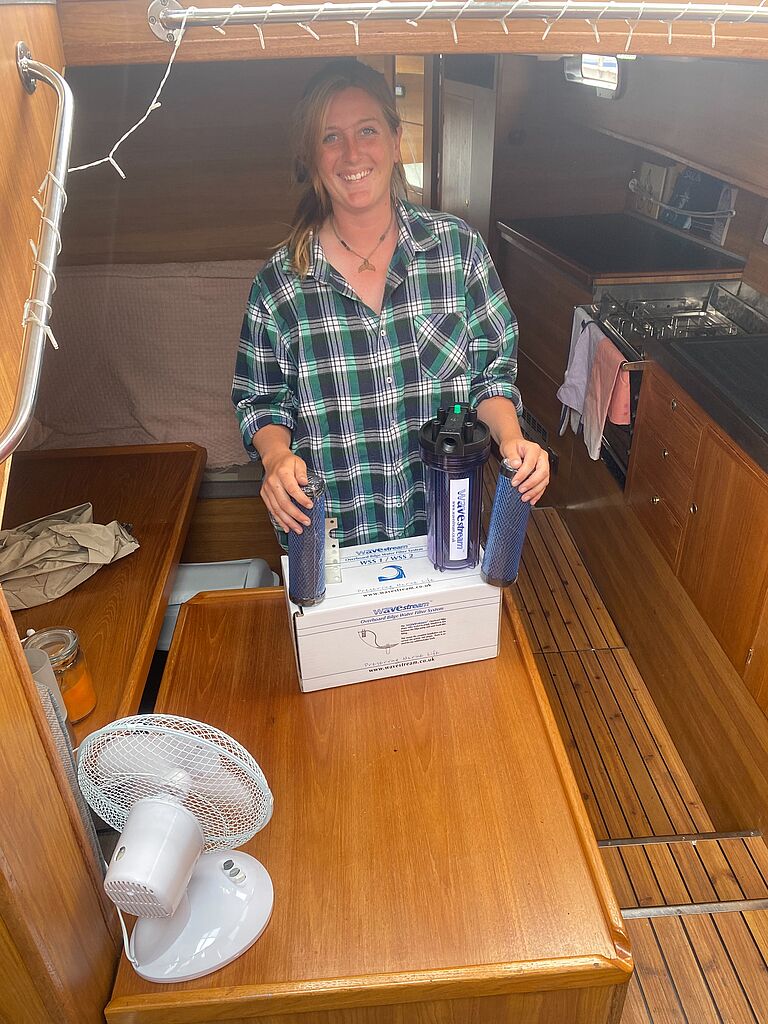
Wave International's Wavestream units are fitted into the discharge line after the bilge pump. The full range was tested by an approved independent laboratory as part of the Lloyd's Register Type Approval process for oil-in-water filtration. Its systems are designed to reduce hydrocarbons in bilge water to below 5 parts per million when correctly installed and maintained.
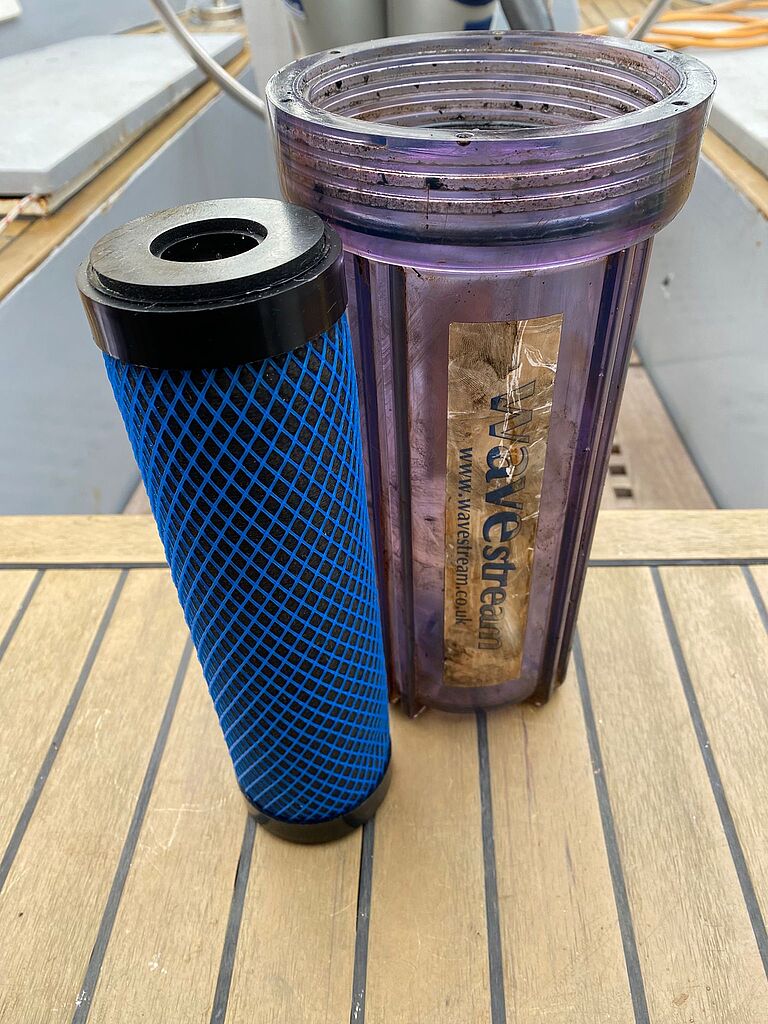
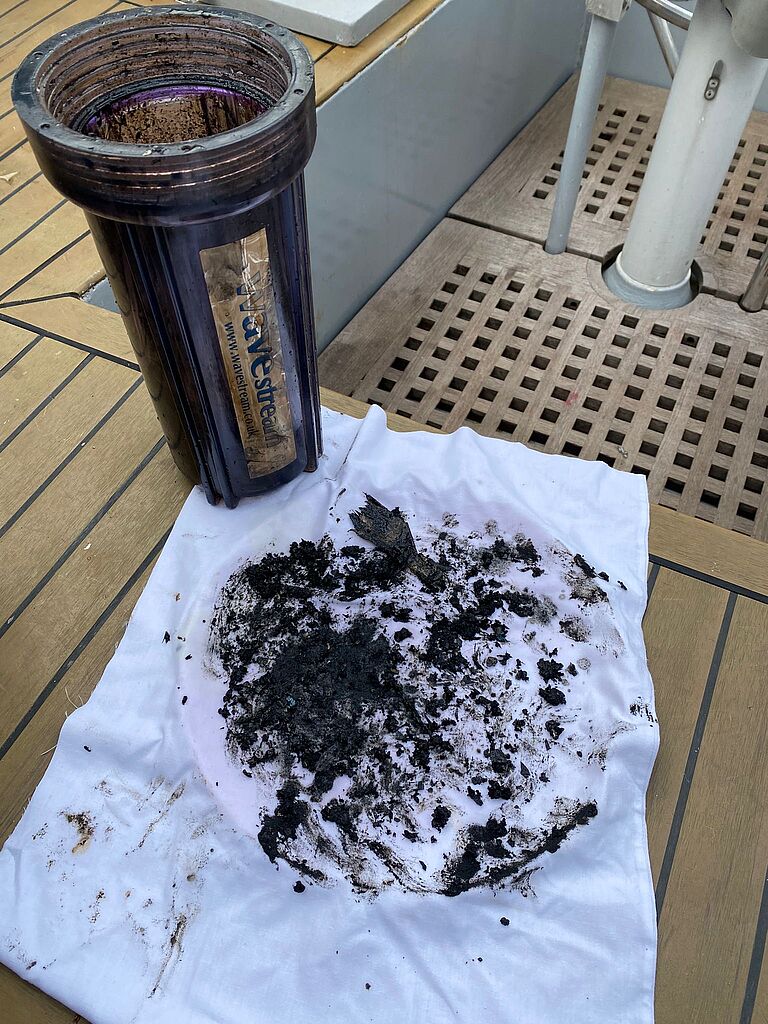
The cartridge can also catch material such as fibres, plastics and paint particles - contaminants that are not always obvious in the water sitting in the bilge. Sometimes it is only when a used cartridge is removed and replaced that the amount of material being carried through the bilge becomes clear.
What a used cartridge can reveal
Marine biologist and broadcaster Monty Halls had a used cartridge from his yacht examined by a specialist microplastics laboratory. At 20 times magnification, the analysis identified paint particles, micro fibres and organic material including sludge and slime. It provided a revealing look at what might otherwise have left the boat unseen.
Sailor Ella Hibbert has had a similar experience onboard her 38ft steel ketch Yeva, which carries a Wavestream System 1. After five months of use and sea trials in Norway, she said she was amazed by the gunk and oil collected. Following her Arctic passage, Ella also reported finding oil, microfibres, microplastics and paint chips when the filter was replaced. These are real-world observations rather than a laboratory result for every installation, but they make the issue much easier to picture. The contents of the bilge do not vanish when the pump starts and without some form of control, they may simply move from inside the boat into the water around it.
Safe installation matters
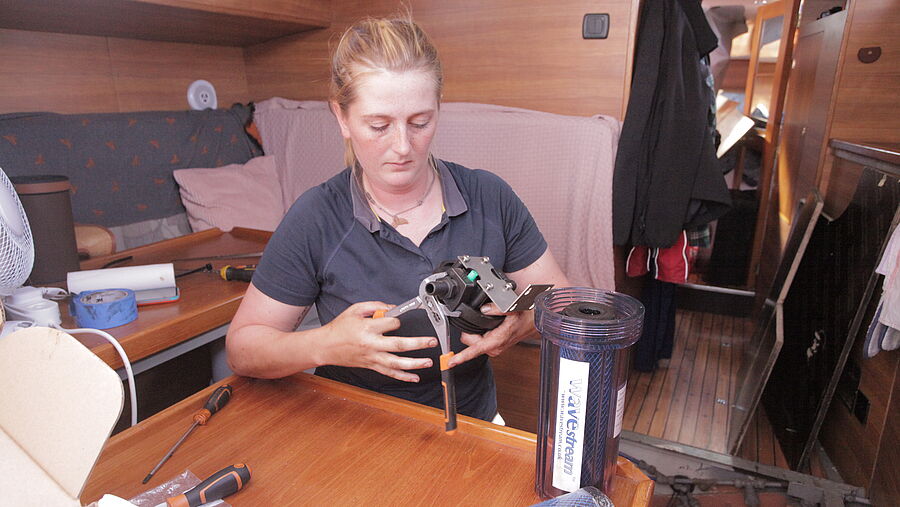
A bilge pump is safety-critical equipment, so it is important that anything added to its discharge line will maintain the flow and performance of the bilge pump. Bilge pumps are generally low-pressure devices, and installing a Wavestream bilge filter creates a minimal differential pressure. Whilst easy to install, owners should follow manufacturer's instructions and seek qualified advice if needed, particularly where a boat is left unattended with an automatic bilge pump.
A filter is not a fit-and-forget item either. Wave recommends checking the cartridge regularly, such as linking it to a maintenance schedule, such as when the engine filter is changed, for example, or at least once a season or sooner after a spill or where the bilge carries more contamination. Ella changes hers seasonally or more often, while Monty Halls has reported replacing his after three months. Used cartridges and absorbent materials should be disposed of responsibly ashore.
The insurance position
Even on a well-maintained boat, a failed hose, damaged fuel line or another sudden problem can create a pollution incident. Pantaenius Third Party Liability cover includes legal liability for sudden and accidental pollution occurring from the operation and use of the vessel, including associated legal defence costs. As always, cover is subject to the terms, conditions and limits shown in the specific policy wording and schedule.
Insurance is there to protect you should an insured incident occur - but it is not a substitute for maintenance, responsible operation or compliance with the rules that apply in the waters where the boat is being used. If oil or fuel is found in the bilge, the immediate priorities are to identify the source, prevent any further discharge where it is safe to do so and seek professional help. If pollution has entered the water, owners should follow local reporting requirements and Pantaenius policyholders should contact Pantaenius promptly if the incident may give rise to a claim or legal liability.
A practical bilge routine
An onboard routine should involve checking regularly for leaks, smells, an oily sheen or residue, and inspecting the pump, float switch, strainer, pipework and filter as one complete system. Keep absorbent materials on board and replace and dispose of used cartridges responsibly ashore.
None of this is complicated, but it brings an easily overlooked part of the boat back into view. A cleaner bilge makes leaks easier to spot, helps protect onboard systems and reduces the chance that a small problem on board becomes pollution in the water.
So, the next time your bilge pump runs, it is definitely worth asking one very simple question: what else might be going overboard along with the water?