This service is currently not available. Please try again later.
10/12/2026
Insurance Insights
From repair to prevention: should boat insurance do more than pay claims?
The International Union of Marine Insurance (IUMI) recently called for a change in the way our industry thinks about risk: a greater shift from repair to prevention.
It’s a discussion that particularly resonates with us at Pantaenius.
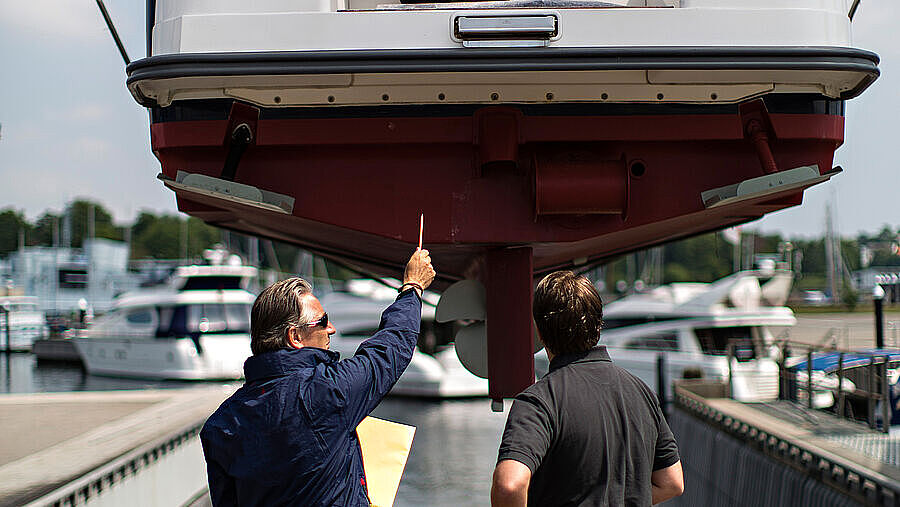
Insurance must, of course, be there when something goes wrong. But we have long believed that the knowledge and experience we gain from insuring boats should also be used to help owners reduce the chances of something going wrong in the first place.
For the leisure marine sector, prevention isn't an abstract insurance concept. It can be very practical.
What we learn from claims can help prevent the next one
As a specialist boat insurer, we see incidents across many different boats, cruising areas and circumstances.
An individual owner might, thankfully, go many years without experiencing a significant loss. Across a large number of boats and claims, however, patterns emerge.
We see the consequences of severe weather, theft, fires, groundings and collisions. We see incidents involving tenders, problems during winter storage and issues that develop while vessels are unattended. And we see how relatively small problems can sometimes develop into much larger ones.
There is considerable value in that experience if we can turn it into practical information for boat owners.
That's one reason prevention is already an important part of the information we provide at Pantaenius. Through our online Journal, we use our experience to provide practical advice on everything from fire prevention, theft and severe weather to winter storage, maintenance, navigation and dealing with emergencies.
The objective is simple: use our experience of marine risk to help people enjoy their boats more safely.
Prevention is good for the boat owner, not just the insurer
It would be easy to look at loss prevention purely from an insurance perspective. Fewer incidents mean fewer claims but that misses an important part of the story.
Even when an insurance claim is handled exceptionally well, most owners would still rather the incident had never happened.
A damaged boat can mean weeks or months off the water. Cruising plans can be disrupted. Holidays can be affected. There may be repairers, surveyors and boatyards to deal with. In more serious circumstances, the experience can be distressing for those involved.
So, when we talk about preventing claims, we're not simply talking about reducing the cost of claims. We're talking about helping owners avoid the disruption that comes with them.
Sometimes the preventative measures are remarkably simple
Loss prevention doesn't necessarily require sophisticated technology or major expenditure.
Take tenders as an example. We regularly assist owners following incidents involving tenders, including tenders breaking free while being towed or losses involving securing arrangements.
Simple precautions such as checking lines and attachment points, using appropriate fittings and regularly inspecting equipment for wear, can help reduce those risks.
The same principle applies across many areas of boat ownership: preparing properly for severe weather, reviewing security arrangements, checking equipment before a passage, making sure the boat is properly prepared for winter and understanding navigation lights, collision regulations and the value of thorough pilotage.
None of these things removes risk entirely. Boating will always involve an element of the unexpected but collectively they can make a difference.
Technology gives us another opportunity
Prevention is also evolving.
Today's boat owner has access to monitoring technology that would have been prohibitively expensive or simply unavailable not so many years ago.
Bilge and shallow water alarms, battery monitoring, GPS tracking and geofencing are just some examples of technology that can potentially alert an owner to a problem before it becomes something much more serious.
The opportunity for insurers is not simply to advocate more technology, but to use claims experience to understand which preventative measures genuinely make a difference and share those insights with owners.
More than a policy and a claims service
For us, the interesting point in IUMI’s call to move from repair to prevention is what it says about the role of a specialist insurer.
Good cover and good claims handling remain fundamental. When something goes wrong, an insurer has to deliver on its promise, but specialist insurers also have something else to offer.
We understand the types of incidents that occur, how losses develop and, in many cases, the practical steps that could reduce the likelihood or severity of them happening again.
Sharing that knowledge should be part of the service.
At Pantaenius, our prevention content already covers a range of subjects and while we don't expect that advice to eliminate claims, if one piece of information prompts an owner to check a mooring before a storm, improve the way a tender is secured, review the security of an outboard or spot a developing problem before serious damage occurs, then it has served a worthwhile purpose.


