This service is currently not available. Please try again later.
11/17/2025
At Pantaenius | Partners & Sponsorships
Safety At Sea: Planning, Awareness And Lifejackets
Good seamanship and safety go hand in hand. Preparation, awareness, and confidence in your boat and crew are what make every passage enjoyable.
To explore what that mindset looks like in practice, we’ve teamed up with Spinlock creators of trusted, innovative safety gear to share practical insights from seasoned sailors.
We also spoke with Hugh Williams, a long-standing Pantaenius UK customer and experienced yachtsman, to hear his perspective on safety at sea. Here’s what he had to say.
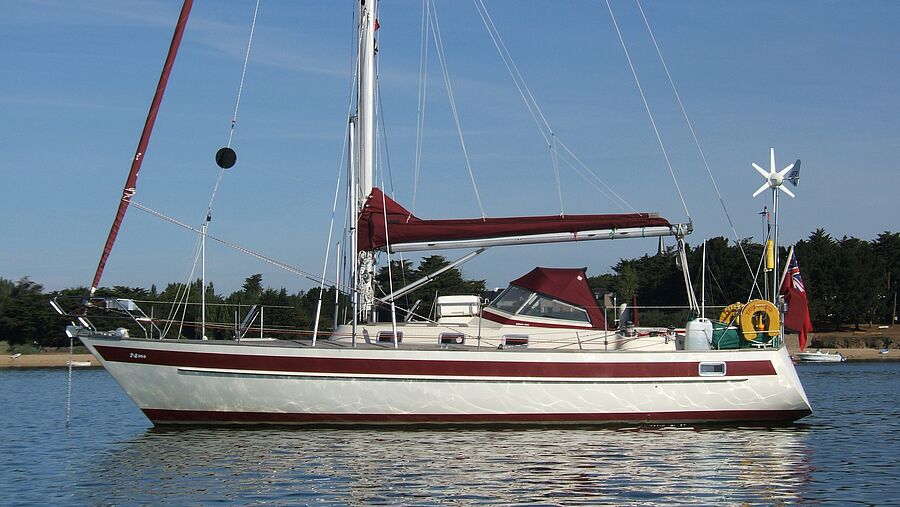
For me, safety at sea is not about testing safety limits - it is about avoiding them. Lifejackets, Personal Locator Beacons (PLB), and other safety gear are my final line of defence, the last hope if things go wrong. My real goal? To make sure I never have to rely on them.
Safety starts before we even leave the dock. I spend time thinking through every scenario – offline, from the comfort of my sofa or bunk, and on-the-fly, anticipating challenges as they arise.
Planning Ahead: Thinking Before You Sail
Keeping my yacht, Tamarajad, seaworthy is step one. That means checking seacocks, hoses, stern gear, and the rudder gland - anything that could let water in faster than I could pump it out. Engine and fuel systems get the same attention: clean filters, water separators and regular servicing. Small issues rarely fix themselves; they almost always get worse, and always at the worst time.
Tamarajad is a sailing yacht, so I make sure the standing and running rigging are checked and replaced at recommended intervals. A fallen mast could have serious consequences. Fighting a flogging sail is no fun and can be dangerous. I also plan for the unthinkable. Falling overboard is my biggest concern, especially as the skipper. I take every precaution: lifelines, sensible routines on deck, and stopping the boat before moving around. But accidents can happen, which is why lifejackets and PLB are essential. I have even rigged steps on the transom to make getting back on board as easy as possible.
Before each season - and before any solo passage - every piece of safety equipment is checked. Lifejackets are tested, PLB verified, auto-inflators inspected. Confidence in your safety gear is as important as confidence in your planning.
On-the-Fly: Staying Aware at Sea
Even the best preparation only works if you are alert on the water. I keep a constant eye on the engine, listening for changes in sound or exhaust water flow. I watch other vessels, follow navigation rules and act early if someone else does not. Floating hazards - from lobster pot lines to stray containers - can be dangerous, so vigilance is key. And, of course, there is the weather. Respecting forecasts, knowing my crew’s and vessel’s limits, and avoiding unnecessary risks is always the smarter choice.
Deck safety is another priority. Lines, winches, and the boom all pose hazards, especially for inexperienced crew. Anticipation prevents most accidents - and a little coaching often goes a long way.
Coco: A Safety-Conscious Crew Member
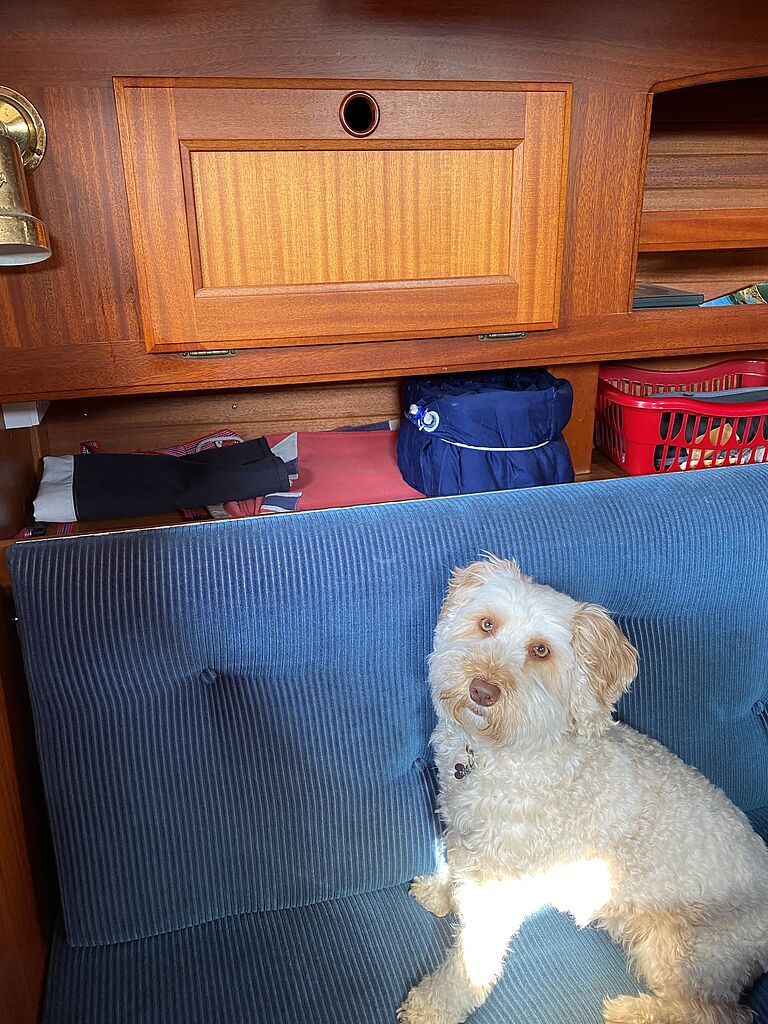
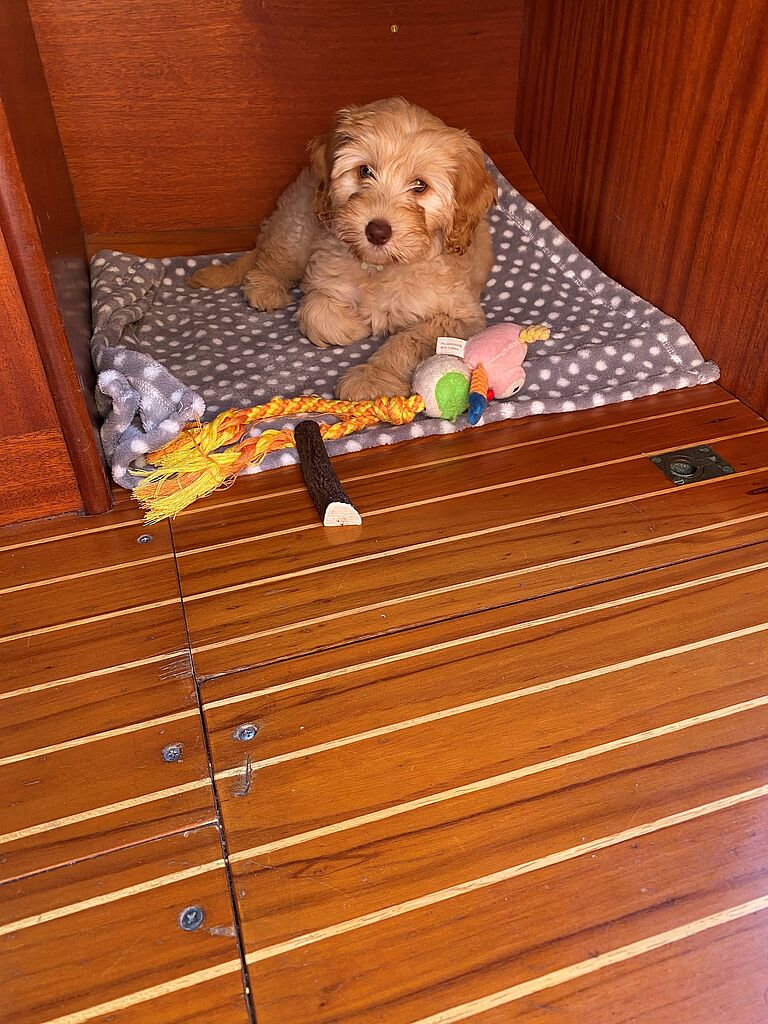
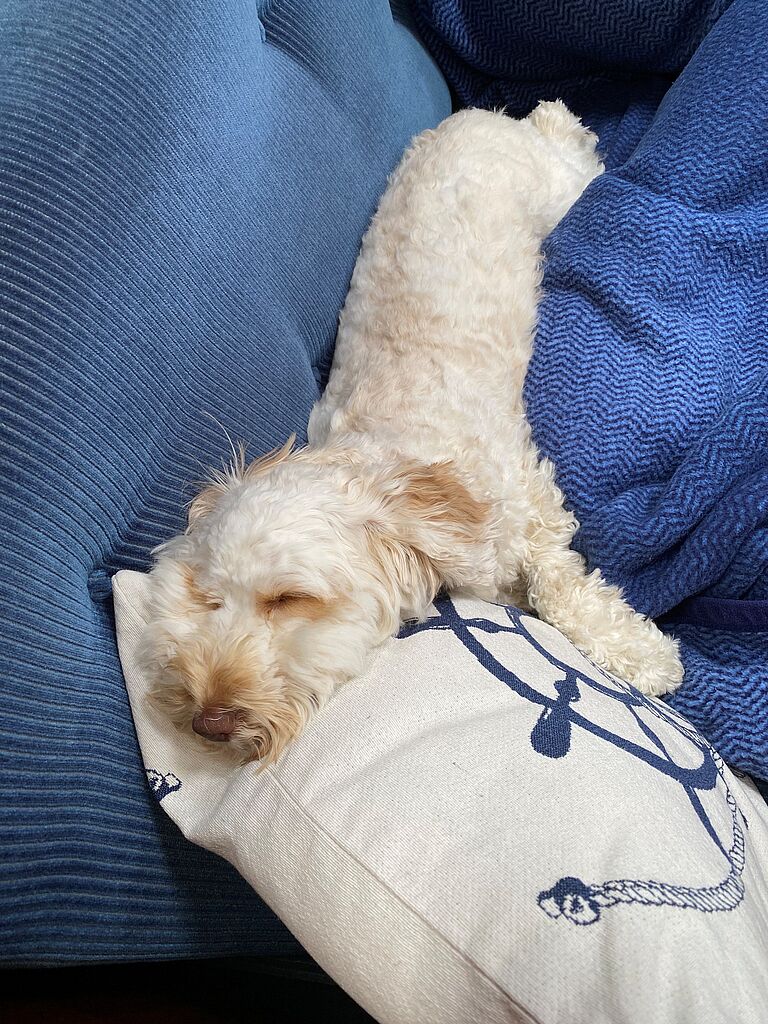
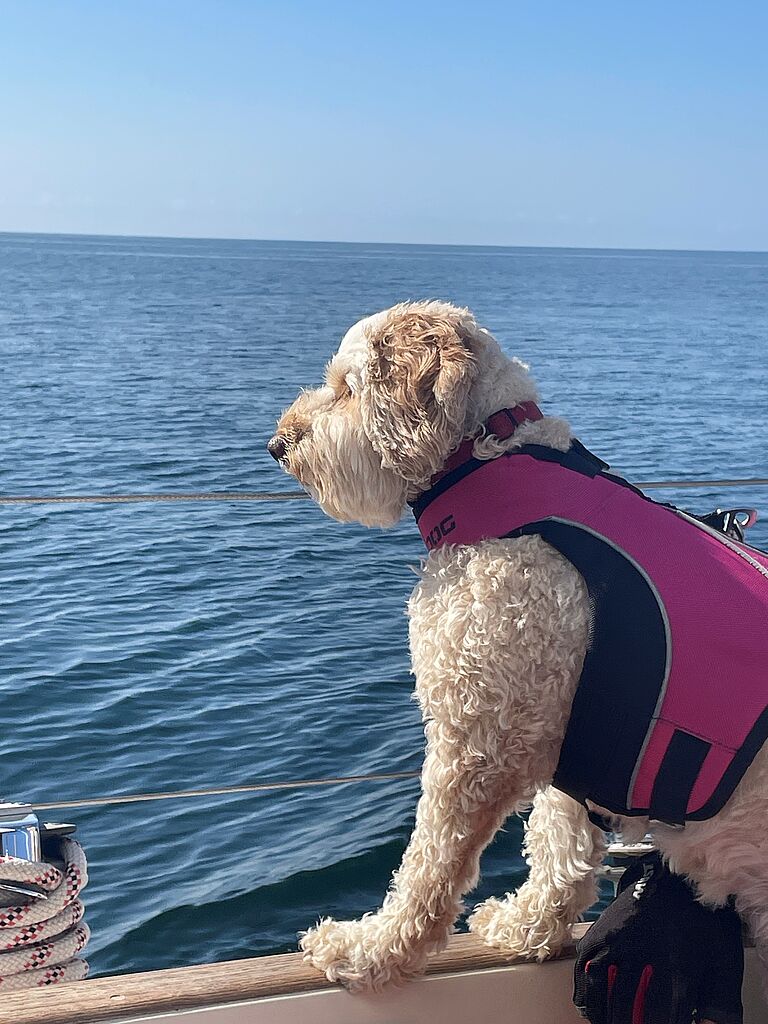
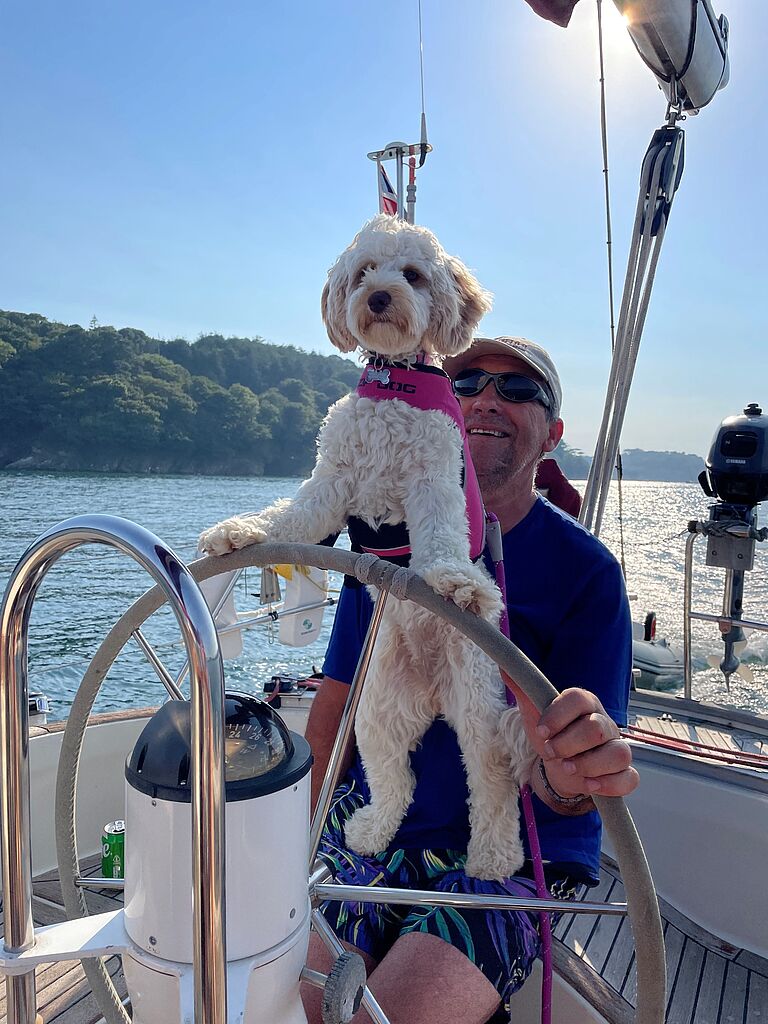
Then there’s Coco, our four-legged crew member. Her safety is every bit as important as anyone else’s on board.
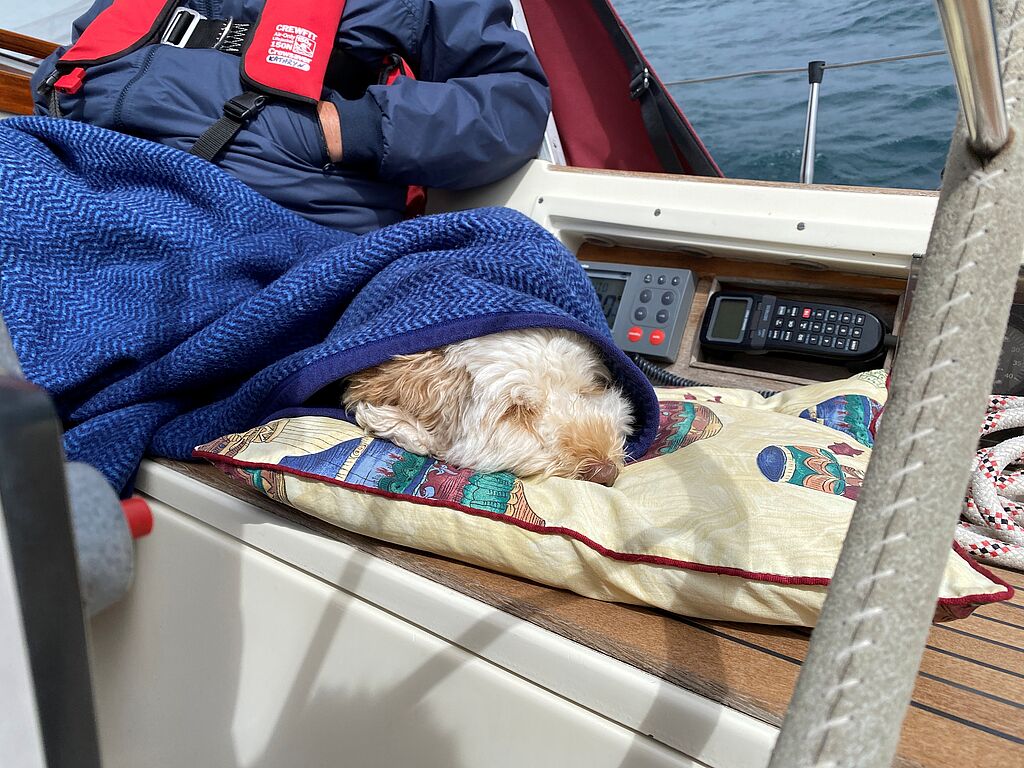
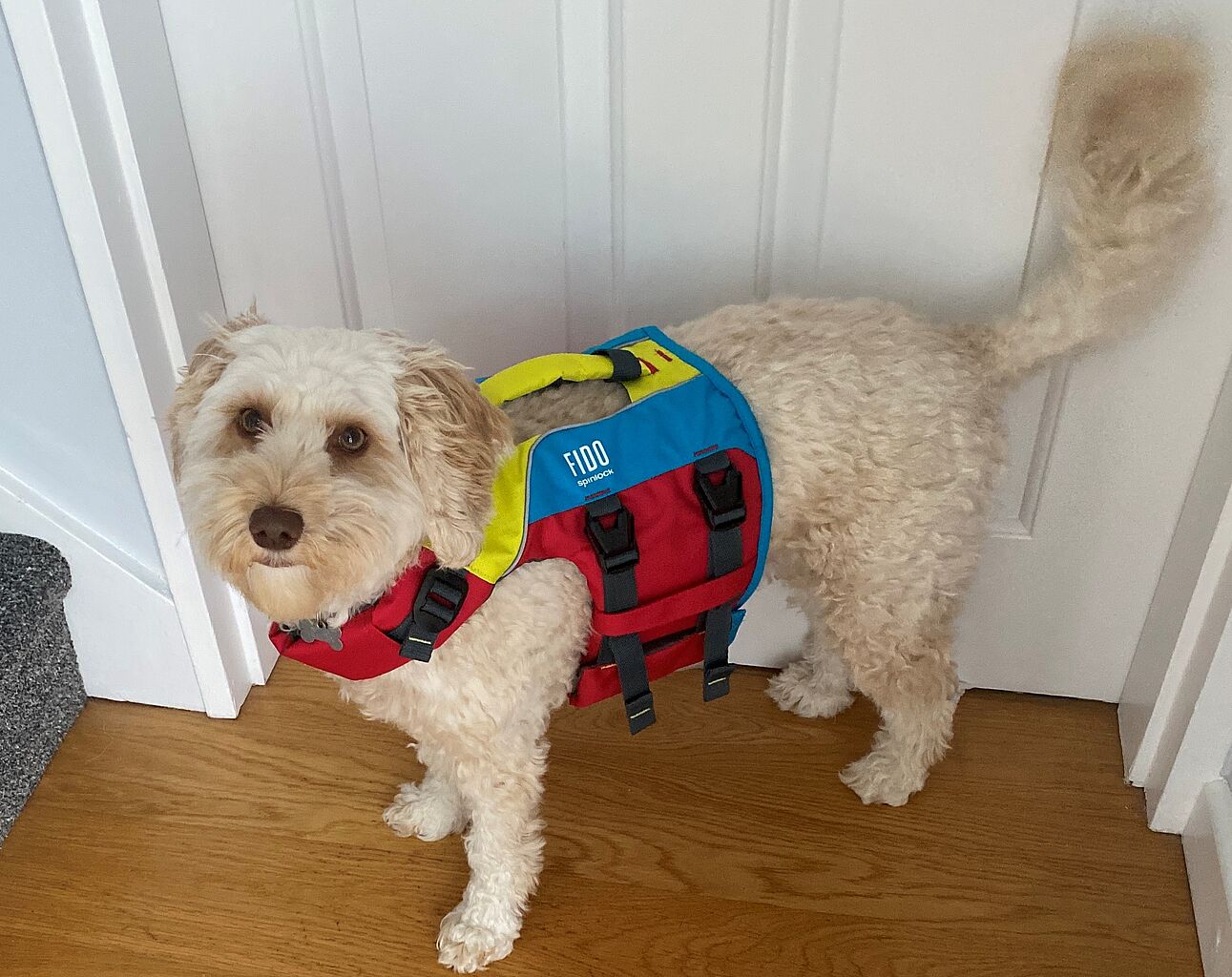
If she is tempted to chase a seagull or dolphin, she is clipped on a lead. In rough seas, we steady her to prevent injury, and whenever there is any risk of her going overboard, she wears a properly fitted lifejacket - tested first in calm water so she knows it is nothing to worry about.
Coco can even sense when the humans are tense, so staying calm on deck is just as much for her benefit as it is for the crew.
We practice man-overboard drills regularly, sometimes with simple toys or props, so everyone, even Coco, knows what to do. It is all about preparation, anticipation, and trust.
Lifejackets: The Last Line of Defence
At the end of the day, lifejackets are more than just equipment - they are peace of mind. They let us enjoy the sea knowing that if anything goes wrong, we are prepared. For me, my crew, and of course Coco, that confidence makes every voyage safer and more enjoyable.