This service is currently not available. Please try again later.
11/05/2026
Cruising | Aboard
The Sea Has Very Little Interest In Your Plans: What 40,000 miles taught one family about being prepared
When Alan ‘Woody’ Wood and his family set off in 2017 onboard their 53-foot Amel Super Maramu, Mothership, they thought they had a fair idea of what the difficult parts might be. Storms. Technical failures. Ocean passages. Boat-schooling three children.
Eight years and more than 40,000 nautical miles later, Woody’s view is rather different. “The hard parts were money, maintenance that never stops and being a long way from help when something goes wrong.”
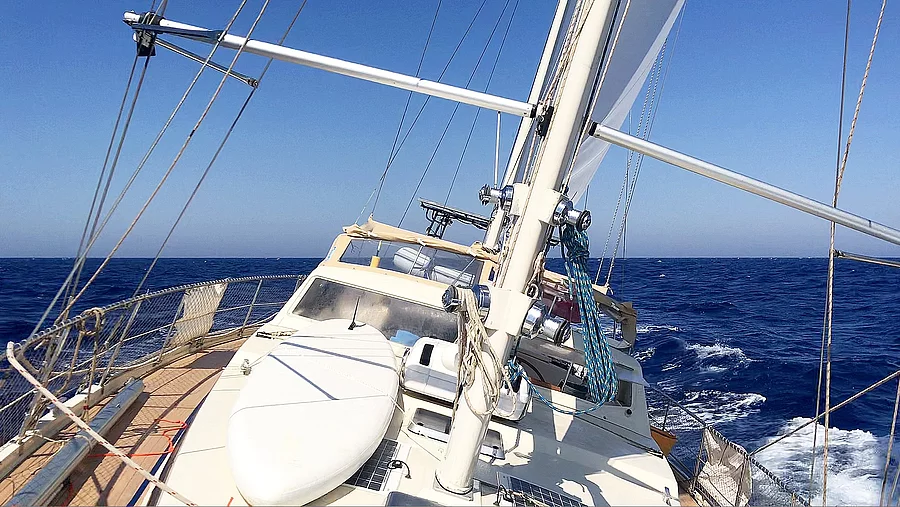
That distinction runs through much of the family’s story. The dramatic risks are the ones people imagine before leaving. The reality of long-distance cruising is often shaped just as much by fuel, paperwork, spare parts, water, money and the ability to solve a problem when straightforward help may be hundreds of miles away.
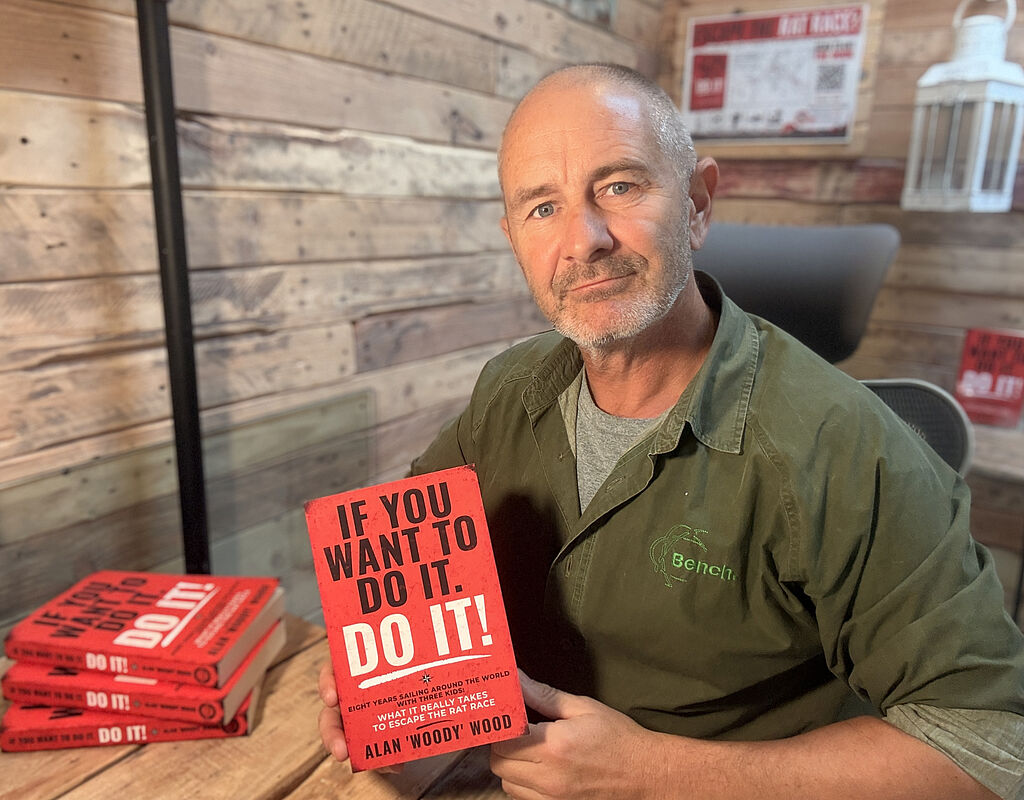
It is one of the themes in Woody’s new book, “If You Want to Do It. Do It!” - which tells the story of eight years sailing around the world with his wife Irenka and their three children.
It also explains one of his observations rather well:

The sea has very little interest in your plans.
Preparing for the problems you do not imagine
At the beginning of the voyage, Woody prepared for the dramatic failures: dismasting, hitting something offshore, man overboard. By the end, his thinking had changed. “I was preparing for the boring ones, because the boring ones are what actually stop you.”
The family lost their autopilot twice and their entire steering system once, all during passages. In Cartagena, Colombia, their daughter Rowan woke Woody during the night because her bunk felt unusually hot. The battery bank underneath it was in meltdown. The family evacuated and spent a sleepless night waiting before removing the damaged cells the following morning.
It was one of many reminders that preparation is not simply about carrying the right safety equipment. It is also about giving yourself enough margin to discover problems before they become emergencies.
One habit the family adopted was to leave a marina and spend several days at anchor before setting off on a serious passage. “Things break after lying dormant on a berth,” Woody says. “At anchor you find that out while you can still get ashore for a part.”
In Curaçao, a water pipe burst behind a panel and emptied somewhere between 800 and 1,000 litres of fresh water into the bilge. “We only noticed when the floorboards started floating. We thought we were sinking.”
During the frantic bailing, Woody tasted the water and realised it was fresh. Because they were still at anchor rather than several days offshore, they could repair the pipe, refill their tanks and continue once the boat was ready.
Know your boat and know your limits
Woody’s years onboard Mothership also reinforced the value of understanding the boat itself. He repaired a water pump with a beer can, replaced a spring behind a windlass motor brush with one cut from a sardine tin and fashioned emergency bailers from detergent bottles. A piece of flip-flop became a hatch retainer and, as far as he knows, is still doing the job.
The stories are funny, but there is an important distinction.
Improvisation has limits. It is for stopping a manageable problem becoming an emergency, not for replacing maintenance or a proper spare.
That lesson became particularly clear on the final long passage towards the Mediterranean. Off the Sudanese coast, the engine’s raw water pump began leaking and spraying salt water over the engine at a moment when stopping immediately was not a realistic option. Woody fashioned a temporary spray guard from an old beer can and washing-up liquid bottle, buying enough time to continue until the situation was safer.
The uncomfortable part was why he needed to improvise in the first place. At the previous haul-out, Woody had reduced the number of spares aboard because they were on the final leg home and the pump was working perfectly. Anchored off Suez, waiting to enter the canal, he eventually had to order a replacement from the UK and have it couriered out.
“What I learned was never to scrimp on critical spares because you think the difficult part is nearly over. The boat has no idea you are nearly home.”
When the plan changes in seconds
Perhaps nowhere was that more apparent than during the final Red Sea passage. Late one night off the coast of Sudan, a small, unmarked skiff approached Mothership carrying several men, one of them armed. The family were travelling in company with another yacht and had planned the passage conservatively. Within moments, the situation changed.
Their priority became staying with the other family boat and moving away from the approaching vessel. The two yachts continued through an area of poorly charted reef until they were clear.
“It was the opposite of everything careful seamanship teaches you,” Woody says. “A cautiously planned family passage had become an escape inside a minute.” It reinforced a lesson learned repeatedly during the voyage: preparation matters, but so does being able to respond when circumstances stop resembling the plan.
A family crew
Those decisions were made not simply as sailors but as parents. Woody does not believe sailing with three children made them more cautious. It made them more disciplined and, as the children grew, they became increasingly capable members of the crew.
Yewan was nine when he stood his first night watch. He had spent weeks learning the instruments, scanning the horizon and, most importantly, when to wake his parents. Either Woody or Irenka was beside him in the cockpit throughout. He arrived wearing his lifejacket and carrying an enormous collection of snacks.
“He received the briefing with enormous seriousness, sat down at the helm, worked through the entire snack collection in about ten minutes and fell fast asleep!” When they noticed he had nodded off, they took the helm.
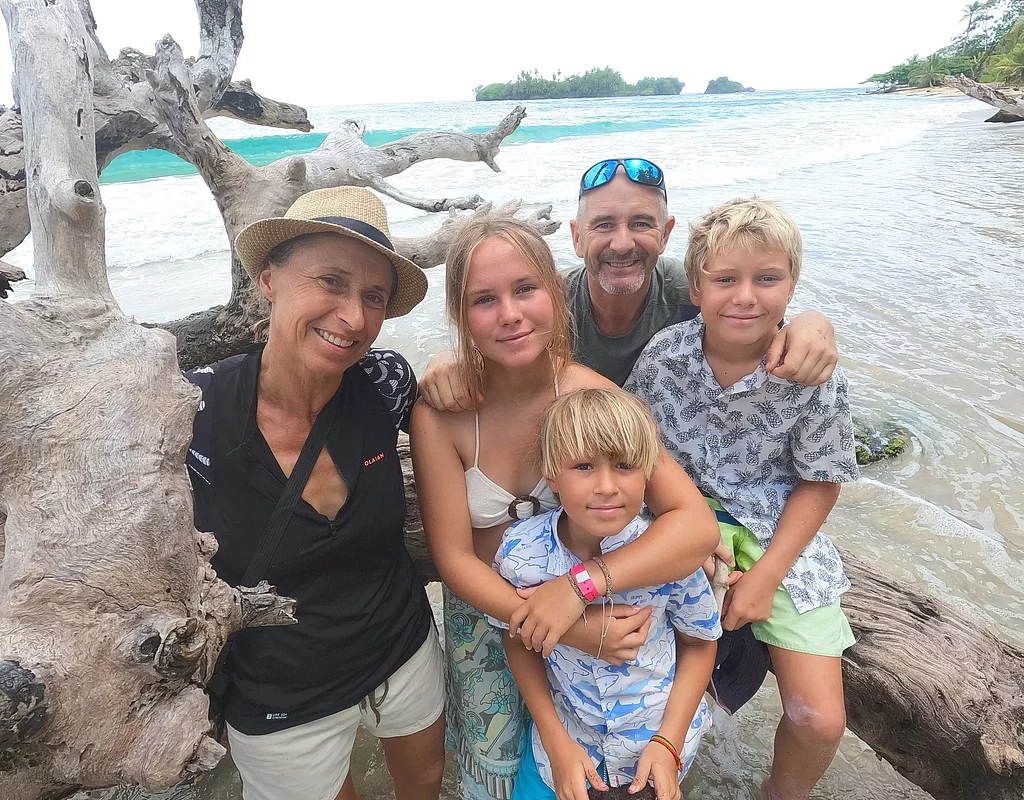
By the Pacific, night watches had become routine for the family. There were mistakes and close calls too, but looking back Woody remains unequivocal about one decision. If he were doing it again, he would take the children. “We planned carefully, travelled conservatively and adapted constantly, with the children involved throughout. It was challenging and at times deeply uncomfortable. There is no adventure without friction.”
The boring stuff matters
Asked what he would tell somebody seriously contemplating several years of cruising, Woody’s advice is practical.
First, learn how to maintain the boat and choose one whose vital systems you can actually access and understand. Second, build a budget that can survive inflation, currency movements and eventually coming home.
The Woods planned their departure for 15 years but barely planned for the return. They also assumed selling the boat would provide a relatively straightforward financial landing. Instead, Mothership remained on the market far longer than expected and has only just sold (October 2026).
His third piece of advice is simpler. “Sort out the boring stuff.”
Insurance. Boat papers. Systems manuals. Phone contracts. Copies stored physically, digitally and online. “All extremely dull right up until you need one in a hurry and the consequences of not having it are serious.”
Insurance was another part of the preparation: understanding which risks the family could insure and which they would carry themselves.
For the first years of the voyage, Mothership had full cover with another insurance company. When premiums rose after Covid, the family reviewed their options and chose to retain the risk of loss or damage to the boat themselves. Through Pantaenius UK, they arranged both Third-Party Liability and Personal Accident insurance, with the latter including cover for emergency medical expenses. Evidence of Third-Party Liability cover was regularly requested by marinas, officials and other authorities along the way.
Cover for extended worldwide cruising can be complex. Remote destinations, access to suitable repairs and the availability of practical support can all affect what cover is available, its cost and its conditions.
Woody’s decision reflected his experience, circumstances and attitude to risk. It was a choice that would not suit everyone. Experience and preparation can reduce the likelihood of problems, but they cannot prevent every loss. Understanding what your insurance covers matters, as does knowing whether you could manage the financial and practical consequences of what remains with you, including serious damage to or the total loss of your boat.
Alongside that sits everything else the family learned over 40,000 miles: know the boat, maintain it properly, carry sensible spares, understand where you are going and be ready to change the plan when circumstances demand it.
Was it worth it?
Woody makes no attempt to portray eight years afloat as an endless procession of turquoise anchorages. There were extraordinary experiences, but also breakdowns, financial pressure, difficult passages, bureaucracy, homesickness and relentless maintenance.
By the end, he admits he was exhausted. Yet asked whether he would do it again, the answer is still yes. “Would I recommend it lightly? No. Would I pretend it was easy? Absolutely not. Was it worth it? Yes.”
Eight years and 40,000 miles after setting off, perhaps the most useful lesson is that you cannot plan for everything. But you can prepare well enough to deal with much more than you thought.
Find out more about Woody’s book, “If You Want to Do It. Do It!”