
This service is currently not available. Please try again later.
09/18/2026
Cruising | Aboard
What Four Years Of Boating With Coco Has Taught Us About Taking Dogs Afloat
Bringing a dog on board changes boating in ways you probably don't expect.
It's not just about buying a lifejacket or finding space for another bed. It's about learning how your dog thinks, anticipating situations they can't understand and building routines that make life on the water enjoyable for everyone.
For one of Pantaenius UK's long-standing customers, those lessons have come from four years of sailing with Coco - an energetic Cockapoo who first stepped aboard the family's yacht at just 10 weeks old.
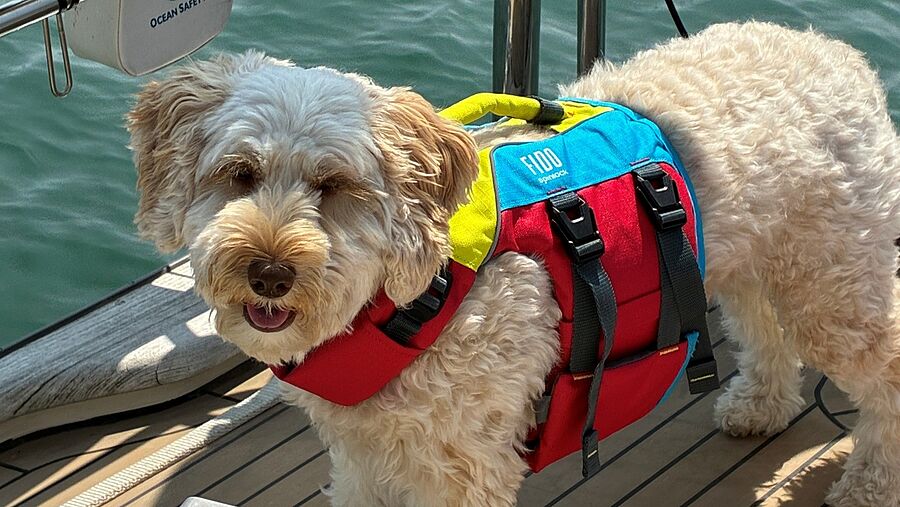
Now in her fifth sailing season, Coco has become a confident member of the crew, but getting there has been a learning experience for everyone on board.
Here's what she's taught her owners.
Every dog settles into their own routine
One of the first discoveries came sooner than expected. Despite every effort, Coco made it abundantly clear that she wasn't prepared to use the boat for toilet breaks. As her owner jokes:"We tried to train her to do her business on board. We failed!". Instead, regular trips ashore have become part of every cruising plan.
Rather than seeing this as an inconvenience, it simply became another consideration when passage planning. Stops ashore now happen naturally throughout the day and have become part of Coco's boating routine.
Interestingly, Coco seems to know exactly what's waiting at the next destination. If the family are heading for a beach, she's somehow awake and ready by 6.30am. If it's a marina or harbour instead, she's perfectly happy to stay asleep for several more hours. It's a small observation, but one that's reminded her owners just how quickly dogs adapt to life afloat and establish routines of their own.
Dogs rely on us to think ahead
One of the biggest lessons has been recognising that dogs can't assess risk in the same way people can. They don't understand propellers, moving boats, slippery decks or changing sea conditions. That means owners have to think for them.
For Coco, that starts before leaving the mooring. Because the yacht is kept on a swinging mooring, every trip begins with a dinghy journey. Boarding and landing have become well-practised routines, helping Coco stay calm and confident.
Her owners also know when extra precautions are needed. If dolphins appear nearby, seagulls become particularly interesting or there's excitement around the boat, Coco may be clipped onto a lead simply because curiosity can quickly outweigh caution. It's never about restricting her - it's about anticipating situations before they become problems.
Introduce safety equipment before you need it
Like many owners, Coco's family wanted her to wear a properly fitted dog lifejacket whenever there was any possibility she could end up in the water. Rather than introducing it for the first time onboard, they made sure it became familiar in a relaxed environment first. She wore it during gentle swims from the beach, allowing her to associate it with fun rather than uncertainty.
That preparation proved invaluable recently. While heading ashore in the dinghy, Coco decided she simply couldn't wait for the beach and launched herself into the water, happily swimming the final few metres. Because the lifejacket already felt completely normal, there was no panic or confusion. It simply did exactly what it was designed to do. Like any piece of safety equipment, the best time to become familiar with it is long before it's ever needed.
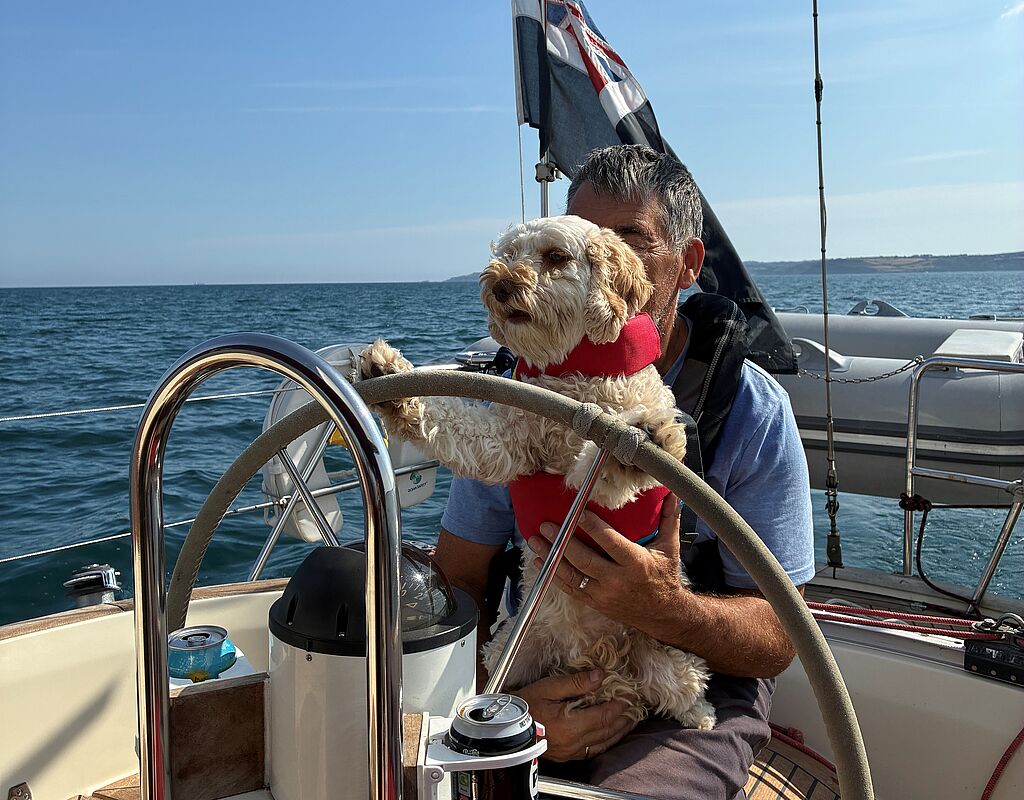
Boats move differently to dry land
Humans instinctively brace themselves when a boat heels or rolls - dogs don't.
When conditions become more lively, Coco's owners naturally help her move safely around the yacht and make sure she always has somewhere secure to settle. If rougher weather is expected, one person takes responsibility for keeping an eye on her throughout the passage. Simple adjustments like these have helped Coco remain relaxed and confident, whatever the conditions.
Dogs read us better than we realise
Perhaps the biggest surprise for her owners has been discovering just how aware Coco is of what's happening around her. Like many dogs, she quickly senses changes in mood. If people become tense, she notices. When everyone stays calm and relaxed, she settles almost immediately. It's a reminder that preparation isn't only about charts, weather forecasts and safety equipment. Confidence on board influences every member of the crew, including the four-legged ones.
The routines never really disappear
After a five-month winter break each year, you might expect Coco to need time to readjust. Instead, she walks back onboard as though she'd never left!
She heads straight for her favourite place on deck and, somehow, always remembers exactly where the treats are kept. It's another reminder that dogs thrive on familiarity. Once boating becomes part of their lives, those routines stay with them.
Every dog is different - and that's part of the adventure
No two dogs will behave in exactly the same way. Some are natural water lovers. Others take time to gain confidence. Some will happily spend all day asleep in the cockpit, while others want to investigate everything around them.
The important thing isn't trying to follow a checklist. It's spending time understanding your own dog's personality, recognising their strengths and anticipating situations where they'll need your help.
For Coco and her family, boating together has become second nature. What began with a curious puppy has grown into years of shared adventures, plenty of memorable stories and a few unexpected lessons along the way.
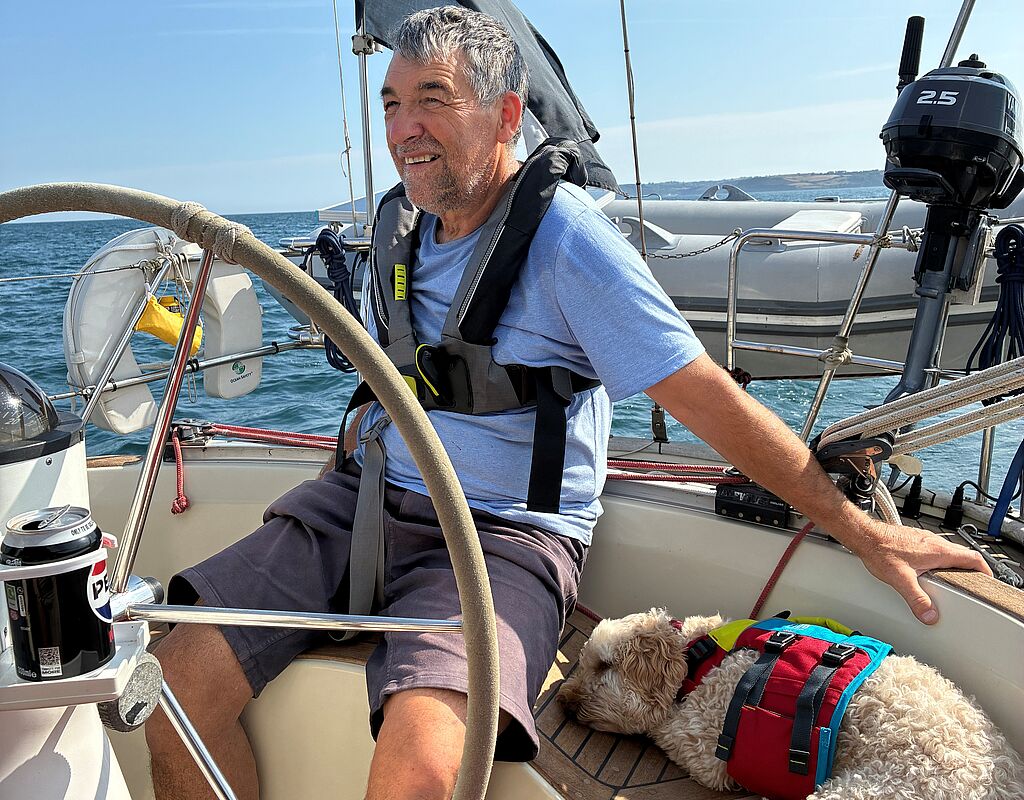
At Pantaenius, we're fortunate to meet customers whose boats are very much part of family life. Coco's story is a lovely reminder that with a little preparation, patience and the right equipment, every member of the crew can enjoy life on the water safely - whether they have two legs or four.


